
Nepal stands at a pivotal crossroads. A push to regulate social media has spiraled from legislature to streets, culminating in deadly clashes, widespread unrest, and ultimately, the resignation of Prime Minister K.P. Sharma Oli. Drawing on over a decade of reporting and political analysis, here’s a clear, comprehensive look at how events unfolded—and what they truly mean.
Timeline of Events: Nepal Social Media Controversy
February–May 2025 – Legislative Beginnings & Public Concern
Early February:
The government introduced the Social Media (Use, Operation, and Regulation) Bill, 2081, adding heavy requirements for platforms: mandatory registration, local grievance contact points, and steep penalties—ranging from heavy fines to years in jail—for non-compliance. Discussions on bill impacts overtook public debate, sparking protests particularly at Maitighar Mandala, led by the Nepal Student Union, which called the bill a suppression of free speech. Meanwhile, users buzzed online about the disappearance of a satirical page called “Troll Nepal,” seen by many as emblematic of the growing crackdown on dissent.
(Sources: bill details from the National Assembly, penalty figures, civil society response, and protests)
Throughout March–April:
A formal thirty-day registration deadline was set via directive. Only a few platforms—TikTok, Viber, and WeTalk (Saransh Media Lab)—complied. Meta’s platforms (Facebook, WhatsApp, Instagram), X, LinkedIn, YouTube, and others remained unregistered. Meta officials visited Kathmandu, but registration still lagged. Critics warned the bill’s vague language could dangerously curtail press freedom and individual rights.
Late August 2025 – Court Directive & Ultimatum
On August 17, Nepal’s Supreme Court mandated that all social media platforms register, enforce grievance mechanisms, and follow local regulations. A formal notice followed on August 28, giving platforms a seven-day deadline.
September 4, 2025 – Nationwide Ban Implemented
With the deadline passed and compliance lacking, the government ordered Nepal’s Telecommunications Authority to block access to 26 major platforms—Facebook, Instagram, WhatsApp, YouTube, X, Reddit, LinkedIn, Signal, Discord, Pinterest, Threads, Quora, and others. Some platforms—TikTok, Viber, WeTalk, Nimbuzz, and Poppo Live—remained operational thanks to registration. The government argued the move was vital to curb misinformation and protect national sovereignty, while critics decried it as excessive censorship.
September 6, 2025 – Incident Sparks Outrage
During rising tensions, a CCTV clip circulated showing a government convoy striking and fleeing from an 11-year-old girl, Usha Magar Sunuwar, in Lalitpur. The footage went viral, fueling public fury amid already heightened unrest.
September 8, 2025 – Gen Z Protests Turn Violent
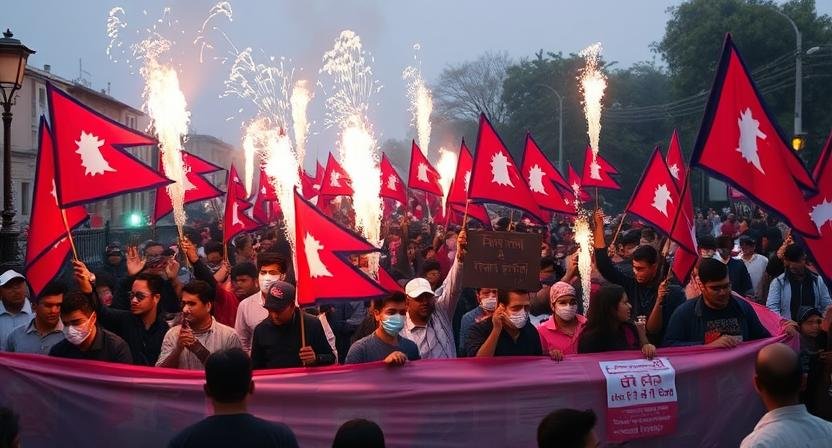
Young people—especially Gen Z—took to the streets in waves of protest. Demonstrators clashed fiercely with police near Parliament, using alternative platforms like TikTok and Viber to organize despite the ban. Security forces responded with live rounds, tear gas, and water cannons, leaving an estimated 14 to 21 people dead and hundreds injured. Curfews were enforced in Kathmandu and Lalitpur.
September 9–10, 2025 – Government Response & Escalation
On September 9, the government reversed course:
- Lifted the social media ban.
- Promised compensation for victims and free medical care for the injured.
- Formed a 15-day investigative panel to review the situation.
But the damage was done. Prime Minister K. P. Sharma Oli resigned, entering a caretaker role. The army intervened—imposing curfew, detaining suspected looters, evacuating officials, and attempting to restore order amid continued unrest. Buildings burned, protests persisted, and a cultural flashpoint—a bride’s bold Haldi ceremony outfit—went viral, igniting broader discussions on generational values and modernity.
In-Depth Analysis: Expert Insights
1. Regulation vs. Repression?
Governments globally are wrestling with balancing digital freedom and accountability. Nepal’s approach—forcing registration, enforcing severe penalties, restricting anonymity—sparked concern among rights groups as a move toward over-regulation. This raises legitimate debates: how do you foster transparency without suffocating dissent?
2. Youth Frustration Fueled Fire
The bloc hit youth especially hard. Gen Z protesters didn’t just oppose the law—they stood against broader issues:
- Economic stagnation
- Rising corruption
- Limited opportunities
The digital restrictions were the catalyst, not the root. The intensity of response underscores how deeply online access intertwines with social identity and political voice.
3. Political Fallout
Oli’s resignation signals the profound impact of collective protest. But caretaker transitions bring uncertainty—will real structural reforms follow, or will old power dynamics reassert control? The involvement of the army in maintaining order adds delicate layers to Nepal’s constitutional balance and civilian-military relations.
4. Civil Society’s Watchdog Role
Media organizations, journalist unions, and activists flagged the law’s vague language and heavy penalties as dangerous precedents. The eruption of public dissent shows the potency—and necessity—of civil voices in defending democratic norms.
5. Digital Sovereignty’s Double-Edged Sword
The state framed compliance as a matter of digital sovereignty. While oversight can be valid, it must be proportionate, transparent, and uphold constitutional freedom of expression. Without these guardrails, regulation risks becoming control.
Looking Ahead: Nepali Crossroads
- Policy Retrenchment or Reinvention?
- Will upcoming legislation truly balance free expression with accountability—or will it continue down a path seen as authoritarian?
- Will upcoming legislation truly balance free expression with accountability—or will it continue down a path seen as authoritarian?
- Trust Rebuilding
- The government’s future credibility hinges on equitable justice, transparent investigations, and real dialogue with youth and civil society.
- The government’s future credibility hinges on equitable justice, transparent investigations, and real dialogue with youth and civil society.
- Technology as Protest Vector
- Even with bans, activists proved adept at using compliant platforms. Digital adaptation is a blueprint for future activism—platforms can’t fully be silenced.
- Even with bans, activists proved adept at using compliant platforms. Digital adaptation is a blueprint for future activism—platforms can’t fully be silenced.
- Global Watch
- The world is watching. Nepal’s move could inspire similar acts in other democracies—or serve as a cautionary tale of overreach under the guise of national security.
Read more: Top Computer Tables for Home & Office | 2025 Picks
Final Thoughts: Lessons for Democracies Everywhere
Nepal’s social media saga reveals that digital policies are not just technical—they are deeply societal. Access to online platforms is woven into modern identity, justice, and freedom. Restricting access brews resentment, particularly among those already marginalized or disillusioned by leadership.
To forge a path forward, Nepal—and any nation—must:
- Engage in robust consultation with stakeholders (journalists, platform operators, civil rights groups).
- Write precise, narrow legislation that addresses real harms.
- Ensure transparency, oversight, and judicial recourse in enforcement.
- Remember: regulation without participation undermines trust.
Why did Nepal ban major social media platforms in 2025?
Nepal banned 26 major platforms like Facebook, YouTube, and X for failing to register under a new law requiring local compliance and grievance mechanisms.
Which social media platforms were still accessible in Nepal during the ban?
Platforms like TikTok, Viber, WeTalk, Nimbuzz, and Popo Live remained accessible as they complied with the government’s registration requirements.
What triggered the nationwide protests in Nepal?
The protests were sparked by the social media ban, but escalated after a government vehicle injured a child and amid growing frustrations over free speech and youth rights.
Did the Nepal government reverse the social media ban?
Yes, the government lifted the ban on September 9, 2025, following mass protests, public outrage, and international pressure.
Why did Prime Minister K.P. Sharma Oli resign?
PM Oli resigned amid intense civil unrest, backlash over the social media ban, and mounting political pressure following the deaths of protesters.